
BEIJING
Beijing was probably my biggest culture shock in China. You feel the weight of communism everywhere: in the architecture, the scale of the city, and the constant presence of police, cameras, and passport checks. But it’s also packed with history, full of places you’ve read about for years and can’t quite believe you’re standing in front of. Give yourself at least 4 full days to see the main highlights.
🚄 Getting There from Shanghai
Take the high-speed train, a futuristic train with a pointed nose that reaches 350 km/h in near silence and great comfort. It covers the 1,318km between Shanghai and Beijing (the equivalent of Paris to Madrid) in 4 hours 15 minutes. As you leave Shanghai, the skyscrapers slowly give way to endless cities and suburbs before the countryside finally appears about an hour later.
⚠️ Tips & Things to Know
- Never leave without your passport – there are checkpoints in certain streets, especially around Tiananmen Square. Passport required to buy tickets for every monument
- People will stare – in many areas locals have rarely seen Westerners in person. Some will laugh, some will ask to take a photo with you, young and old. Some will try to sneak a selfie more or less discreetly 😄 Do not take it badly, it’s friendly curiosity
- Book Tiananmen Square 24 hours in advance via WeChat, it is in Chinese, use a translation app to navigate it
- Forbidden City is closed on Mondays
- Metro – easy to use with station names in English. Buy a single-use ticket at the machines (select line then destination), the ticket gets swallowed by the machine on exit. Note: some machines don’t issue tickets to foreigners, go to the counter in that case
- Police everywhere – on foot, on scooters, in small vehicles. Heavy security around all major sites
How to Organise Your Days
- Day 1 -Forbidden City + Jingshan Park + Beihei park + Hutong
- Day 2 – Great Wall (full day)
- Day 3 – Tiananmen Square + Summer Palace + Qianmen Street
- Day 4 – Temple of Heaven + Opera exterior + train back to Shanghai
Forbidden City
One of those places you’ve heard about your whole life and that doesn’t disappoint. The scale alone is staggering: 720,000 square meters, more than three times the size of the Louvre. 980 buildings, 8,728 rooms, home to 24 emperors. The outer courtyard has no trees, it is intentional, to emphasize the power and emptiness of imperial authority.
We booked a guided tour in English through GetYourGuide which was worth it, the history is dense and having someone explain it makes a huge difference. Visitor numbers are capped at 40,000 per day (down from 80,000 before Covid), so book tickets in advance on the official Palace Museum website with your passport number.
After: exit through the North Gate and walk directly to Jingshan Park opposite: a small hill built from the earth excavated during the Forbidden City’s construction, following feng shui principles. The view from the top over the entire Forbidden City is one of the best in Beijing.


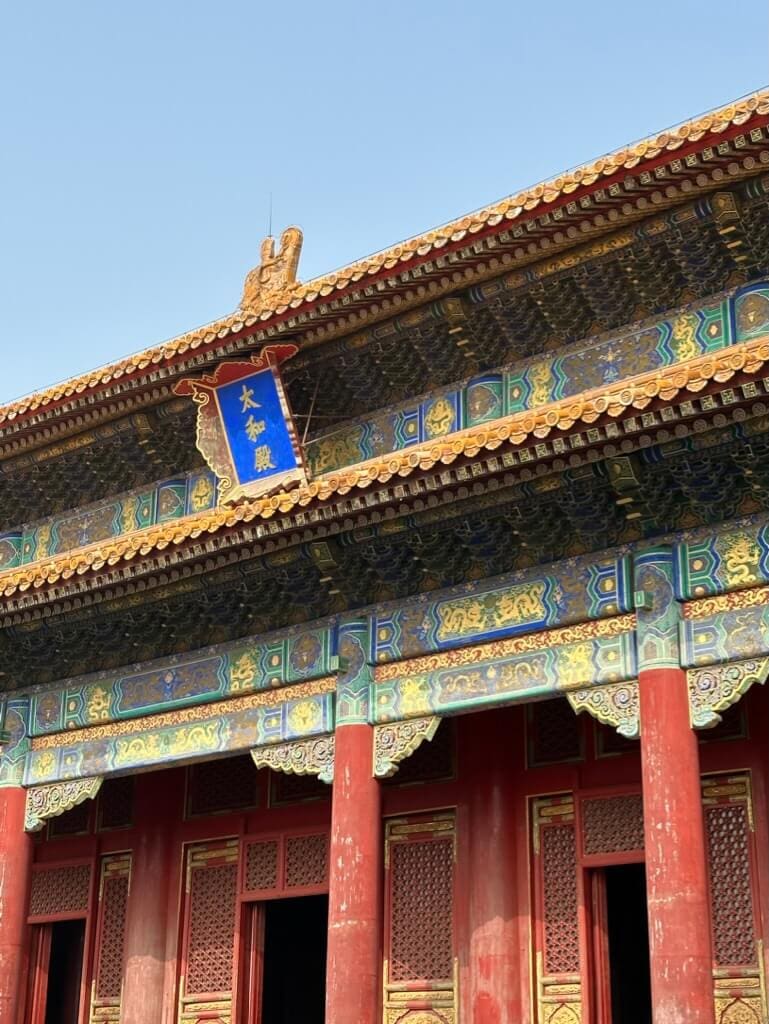

Tiananmen Square
Register on WeChat 24 hours before your visit: the app is in Chinese, use a translation tool.
Getting in is an experience in itself: 4 security checkpoints, passport and visa checks, full bag search. Chinese citizens scan their ID cards and have their face matched by a machine. Lighters are confiscated, the bins at the entrance are full of them.
Important: do NOT enter through the gate under Mao’s portrait, that’s the main entrance to the Forbidden City and there’s no turning back. You’d have to walk 2km and go through all the checkpoints again to return to the square.


Hutongs
The hutongs are Beijing’s old alleyway neighborhoods, narrow pedestrian lanes, traditional courtyard houses (siheyuan), shops, street food. Some date back 700 years, originally reserved for aristocrats near the Forbidden City. They’re disappearing fast due to urban development, most were demolished between 1990 and 2010 but since 2016 the city has protected and renovated several areas.
Walking through them is the best thing you can do in Beijing. Quiet, human-scale, completely different from the monumental city around them.

Great Wall – Mutianyu Section
There are three main sections accessible from Beijing. We chose Mutianyu, about 70km from the center, less crowded than Badaling, better architecture, 22 guard towers, and a fully restored 22km stretch. The history here goes back 1,500 years, with the current fortifications dating from 1568.
Getting there: we took a Didi, about €35 for 70km. The journey takes 1.5 to 2 hours depending on traffic. Aim to arrive around 9am for a more peaceful experience before the crowds arrive later in the morning.
On site: take the cable car up, walk west first then east to the far end (about 4km), then come back down by chairlift or oboggan slide.
The fortifications follow the mountain ridgelines, and the views are extraordinary. You genuinely can’t understand how something this scale was built in these mountains with the tools available at the time.


Summer Palace
The highlight of Beijing, even more beautiful than the Forbidden City on my opinion. Built as an imperial garden and later expanded during the Qing dynasty, it’s an enormous park centered around a vast artificial lake, with islands and pavilions connected by decorative bridges.
Must-dos on site:
- Walk the Long Corridor – 728 metres of covered gallery decorated with thousands of painted scenes
- Take a boat across the lake
- See the Marble Boat (the Empress Dowager Cixi’s famous folly – a stone boat that never moves)
- Climb to the Palace of the Sea of Wisdom at the top – the visit stops at the Four-Headed Goddess Palace just below the summit
- Exit via the East Gate through a maze of staircases
Enter from the North Gate. Located 15km from the center, take metro Line 4 or Didi outside rush hour.
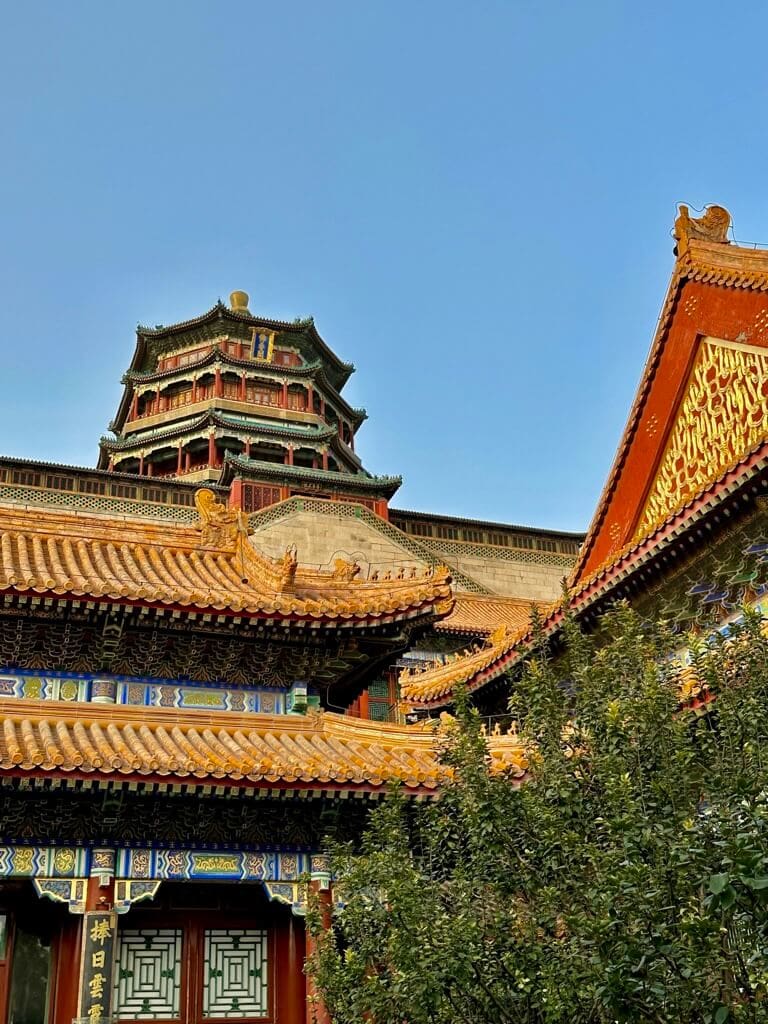


Rue Qianmen
A beautiful pedestrian street lined with restaurants, including a Michelin-recommended spot famous for its Peking Duck, also available as takeaway if you want to eat while you walk.


Temple of Heaven
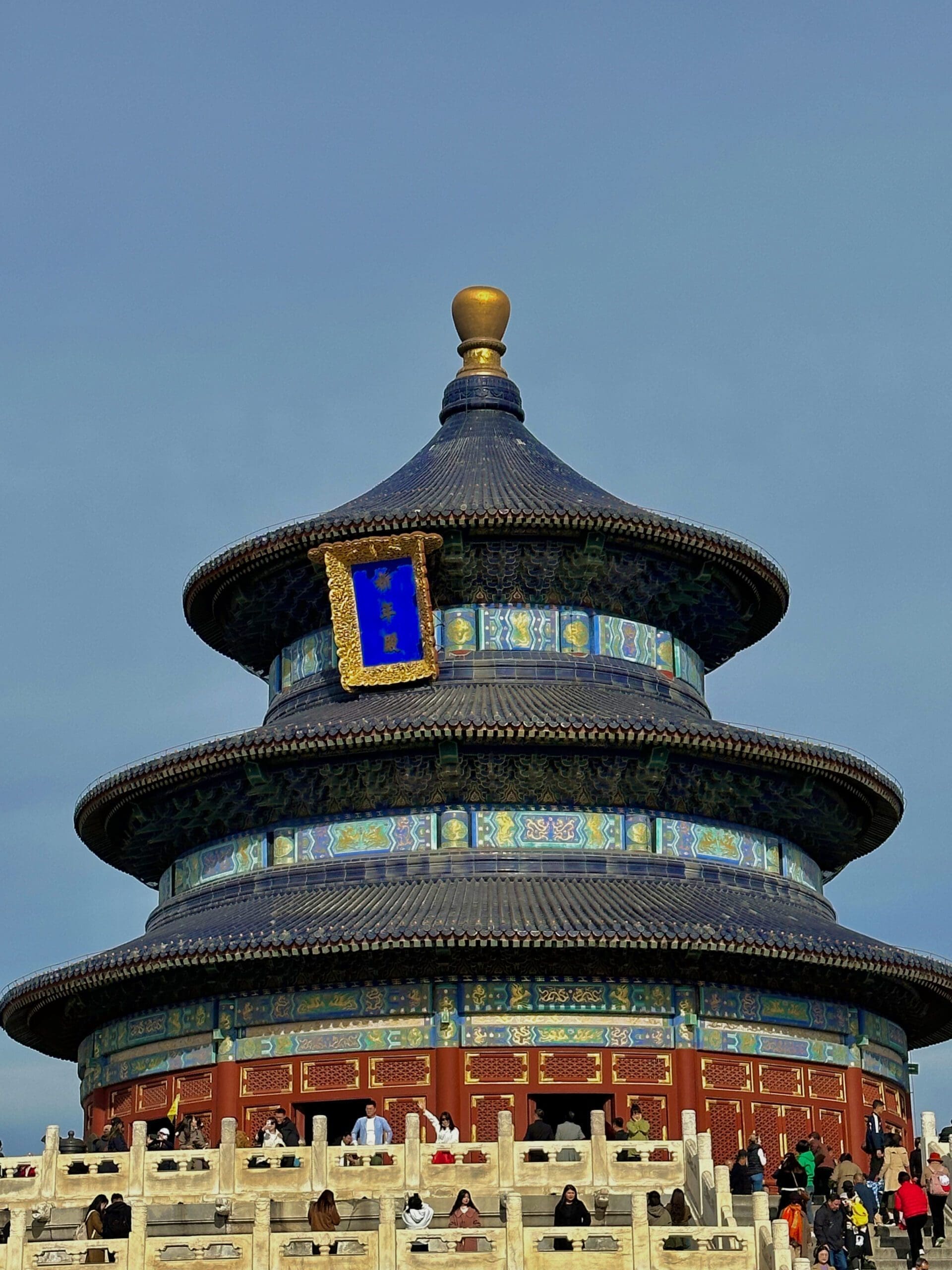
Built in 1420, where Chinese emperors came to pray for good harvests. The site set in a huge park, it’s beautiful and peaceful, a must


National Centre for the Performing Arts
A perfect semi-oval of titanium and glass sitting in a lake, its reflection completing the circle. Access is via underground passages to avoid disrupting the exterior lines. Worth a visit even just for the outside.


Beihai Park
One of Beijing’s oldest imperial parks, built around a lake with a white pagoda on an island in the middle. Less touristy than the other sites, it is good for a relaxed walk.


Leave a Reply